
The Challenge

Always Ready, Rarely Used

The device is normally powered from 120 VAC mains, which is a reliable and convenient source of energy when everything is working. The catch is what happens when it isn’t. When the power goes out, the device still needs to get any pending data up to the backend and let the operator know it’s about to go offline, so simply dropping off the network along with the mains supply isn’t acceptable. That meant we needed a backup power source capable of keeping the device alive long enough to do its job during an outage.

Like the rest of the device, the backup had to do this for 20 years, and it had to do it anywhere, from -40°C in a prairie winter to +60°C on a sun-baked pole in summer. Unlike in consumer electronics, where a user can just swap out a dead battery, rolling a truck out to a remote electrical grid location can
The Considerations

Most Batteries Don't Wait That Long, and They Really Don't Like the Cold

Twenty years is a tough ask for any battery. Rechargeable chemistries tend to lose capacity over months or a few years even when they’re not being used, and most primary cells aren’t designed to sit for two decades and still deliver useful current when called upon.

Temperature makes the problem worse. Most chemistries lose significant capacity at the low end of our operating range, and some stop working entirely. On top of that, the device’s radio transmissions draw brief but significant current peaks that exceed the steady-state rating of the long-life primary cells that can survive the 20-year timeline in the first place. So the batteries that could last weren’t rated for the current we needed, and the batteries that could deliver the current wouldn’t last.

Our Solution

Engineer Around the Gaps

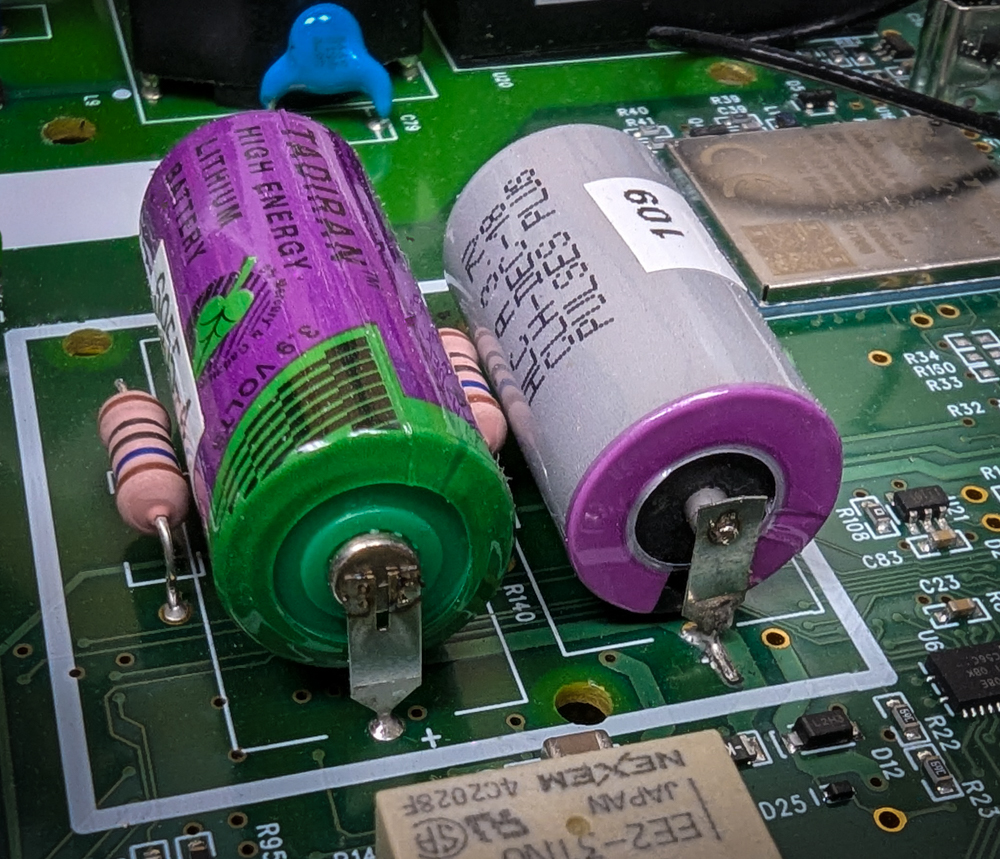
After an extensive component search, we selected the Tadiran TL-6955/TP primary lithium cell for its exceptional calendar life. It checked most of the boxes but fell short on two: peak current delivery and performance in extreme cold. Rather than compromise on a different chemistry, we engineered around those gaps with a three-part strategy.

First, we paired the primary cell with a Tadiran HLC-1530A/TP hybrid-layer capacitor placed in parallel. The HLC absorbs the transmission current spikes, keeping the primary cell within its rated discharge curve and preserving its long life.

Second, we added firmware-controlled heating. Two power resistors flank the battery and provide warming on demand when the internal temperature drops below a safe threshold. The firmware monitors temperature and only activates the heaters when it actually needs to, which keeps energy consumption low.

Third, we designed a thermal micro-enclosure around the battery subsystem. Rather than heating the entire device interior, we gave the cell and the HLC their own small insulated compartment, a kind of “battery room.” This cuts down the volume of air that needs to be warmed, which in turn cuts heater power draw and extends how long the backup can keep the device running in cold weather.

The combined approach meets the full -40°C to +60°C operating range with a 20-year projected life, no truck rolls required.

‟customer comment”

— author
A picture of the device's battery with warming resistors

The Technologies Behind This Project

Electronics Design
Primary Lithium Cell Hybrid-Layer Capacitor
Firmware and Software
Thermal Management Firmware